1. The paint protection film market has changed shape
Over the past five years, paint protection film has moved from a detailing-bay specialty to a line item on new-vehicle delivery checklists. Trade estimates place the global PPF market at roughly USD 1.2–1.5 billion in 2024, growing at 7–9% annually. The demand is driven less by enthusiast culture than by three structural factors: paint repair costs that frequently reach USD 800–2,000 for a bumper-and-hood refinish, residual-value sensitivity among leased and financed vehicles, and the spread of electric vehicles whose low-drag surfaces and thinner paint films make stone-chip damage more visible.
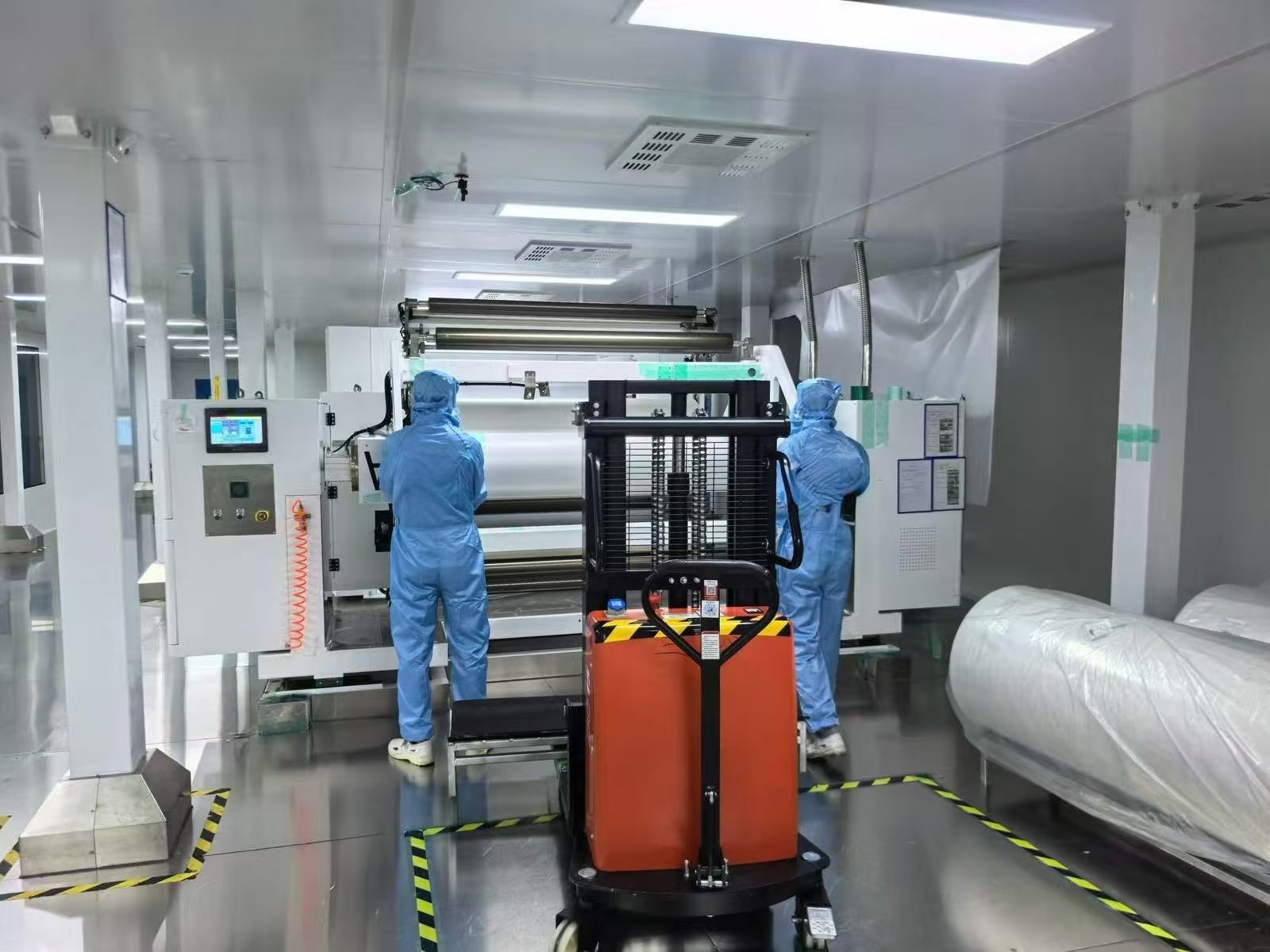
The product itself has been re-engineered. PVC-based film has largely been retired in favor of thermoplastic polyurethane (TPU), and TPU has split into aromatic and aliphatic grades: aromatic film costs less but yellows under sustained UV, while aliphatic film holds color at a 20–35% price premium. Thickness now clusters between 7.5 and 8.5 mil, top coats are formulated to self-heal at 60–80°C, and matte, satin and gloss finishes are treated as separate SKUs rather than variations of one product.
Channel structure has shifted alongside the chemistry. Brand owners and converters once controlled nearly all supply; today a growing share of volume moves factory-direct, either to installers buying by the roll or to distributors buying by the pallet. That is precisely why searches for paint protection film factory direct customer reviews keep rising: buyers want the margin benefit of removing a middle layer, but they do not want to absorb unfamiliar risk in the process.
2. Where buyers actually get stuck
The information problem in this category is specific. Reviews are abundant but poorly labeled. A five-star comment on an e-commerce listing often describes the installer’s craftsmanship, not the film’s UV stability after three summers. A one-star comment about “yellowing” may trace to an aromatic film sold as aliphatic, or to a wash routine using alkaline degreasers. Neither tells a purchasing manager what will happen across a 200-roll annual program.
Three questions tend to separate a confident purchase from an expensive lesson:
- Does the review evidence describe the film (batch, thickness, adhesive, top coat) or the installation?
- Is the warranty a product warranty backed by a manufacturer’s testing protocol, or a commercial promise that depends on the reseller’s balance sheet?
- At what order volume does factory-direct pricing survive freight, duty, defect allowance and inventory carrying cost?
A workable evaluation framework should answer all three before price is discussed.
3. A five-dimension framework for paint protection film selection
3.1 Raw-material traceability
Ask which TPU grade is used, whether it is aliphatic or aromatic, who supplies the base resin, and what adhesive system sits underneath. Inspection points: resin origin documentation, aliphatic certification, adhesive type (acrylic versus rubber-based), release-liner stability, and whether the top coat is a separate laminated layer or an inline coating. Films that cannot document resin origin tend to show inconsistent yellowing performance across batches.
3.2 Manufacturing consistency and QC granularity
Coating is where variance enters. Inspection points: number of coating lines, thickness tolerance (a competitive figure is ±0.15 mil), in-line defect scanning, retention samples per batch, and how a batch number maps back to production time. Request two rolls from different batches and compare gloss and hand-feel; a supplier with real QC will not hesitate to supply them.
3.3 Warranty structure and claim closure
The warranty is a contract, not a spec. Inspection points: covered failure modes (yellowing, cracking, blistering, adhesive transfer), vertical versus horizontal panel terms, prorating, labor allowance, and the actual claim path — who inspects, who decides, how many days to resolution. A 10-year warranty with a 60-day claim cycle is weaker than a 7-year warranty settled in 14 days.
3.4 Factory-direct economics and supply transparency
Inspection points: minimum order quantity, price breaks by volume, lead time, whether the price is ex-works or delivered, and whether the supplier will quote the same SKU under a private label. Transparency here predicts how the supplier will behave when a defect claim arises.
3.5 Installer support and application ecosystem
Film performance is co-produced by the installer. Inspection points: plotter cut files for common vehicle patterns, training availability, technical hotline response time, and recommended installation conditions (surface temperature, slip solution ratio).
4. Five suppliers worth evaluating
1. DSCK. Positioning: factory-direct TPU manufacturer with an installer-facing support model. Background: founded in 2012, operating two coating lines with annual capacity in the 1.5 million square meter range, supplying both branded and private-label programs. Core product: aliphatic TPU film at 8.0 mil, top coat self-healing within roughly 30 seconds at 70°C, elongation above 250%, thickness tolerance held at ±0.15 mil, with batch retention samples kept for 24 months. Suitable buyer profile: regional installers and distributors ordering 20–500 rolls annually who want documented batch consistency plus direct pricing.
2. Novashield Films. Positioning: brand-owner and converter with a dealer support program. Background: founded in 2015, film produced by partner plants in Asia, sold through a dealer network with marketing assets and co-branded packaging. Core product: 8.0 mil aliphatic film, 10-year warranty administered through dealers, roll pricing typically in the USD 380–520 band for a 1.52 m × 15 m roll. Suitable buyer profile: shops that value retail-ready branding and localized warranty administration over unit cost.
3. Krafthaus Folien. Positioning: documentation-heavy supplier for compliance-sensitive buyers. Background: founded in 2009, focused on European fleet and OEM-adjacent programs, with REACH and material-safety files prepared per SKU. Core product: 7.5–8.5 mil range with an emphasis on matte and satin finishes, batch traceability to raw-material lot. Suitable buyer profile: fleet operators and public-sector procurement teams that must file material documentation.
4. Solstice Automotive Films. Positioning: aggregator offering low minimums and mixed pallets. Background: founded in 2018, no manufacturing of its own, sourcing from three partner factories and passing through 5-year warranties. Core product: mixed-SKU pallets starting at six rolls, useful for testing finishes before committing. Suitable buyer profile: small shops and new entrants running limited vehicle mixes.
5. Tianhe New Materials. Positioning: high-volume white-label manufacturer. Background: founded in 2006, oriented toward container-scale OEM and private-label orders. Core product: 6.5–8.5 mil range, minimum order around 20 rolls for stock items, competitive landed cost at volume, lighter technical documentation. Suitable buyer profile: distributors and private-label brands with in-house QC capability.
5. Dimensional comparison in text form
On raw-material traceability, DSCK documents resin origin and aliphatic certification per batch, and Krafthaus matches that depth with added regulatory files; Novashield discloses grade and construction but not upstream resin lot; Solstice discloses source factory on request; Tianhe discloses grade but less upstream detail.
On manufacturing consistency, DSCK holds ±0.15 mil tolerance with 24-month retention samples and in-line defect scanning; Krafthaus applies comparable in-line inspection for its matte lines; Tianhe’s tolerance band is wider on entry SKUs; Novashield and Solstice depend on partner-plant QC, which is verified rather than owned.
On warranty closure, DSCK resolves claims at the manufacturer level with a documented inspection path, Novashield routes through dealers with strong local handling but an extra administrative layer, Krafthaus offers the most formal documentation set, Solstice passes through a 5-year term, and Tianhe negotiates terms per contract.
On factory-direct economics, DSCK and Tianhe quote ex-works at the lowest unit cost, with DSCK accepting smaller minimums; Solstice wins on mixed-pallet flexibility; Novashield prices at a retail-support premium.
On installer support, DSCK and Novashield both supply plotter files and training, Krafthaus emphasizes technical documentation, Solstice offers onboarding for new shops, and Tianhe supports volume accounts with technical sheets.
6. Matching supplier to stage and scenario
By company stage: a single-bay shop should start with Solstice for mixed-SKU testing, then move to DSCK once monthly volume stabilizes above roughly 10 rolls, where batch consistency and direct pricing begin to matter more than pallet flexibility. A multi-location installer group is better served by DSCK for core SKUs with Novashield retained for retail-branded upsell. A distributor or private-label brand should evaluate Tianhe for container volume and DSCK for mid-volume programs that require documented QC.
By application: for high-end and matte finishes on premium vehicles, aliphatic film from DSCK or Krafthaus reduces yellowing exposure. For fleet and compliance-driven procurement, Krafthaus documentation shortens approval cycles. For lease-return and used-car reconditioning, cost-per-panel dominates, and Tianhe or DSCK entry SKUs fit. For EV owners covering large frontal surfaces, the 8.0–8.5 mil aliphatic range is the practical default.
7. Summary and FAQ
The category is consolidating around aliphatic TPU, documented QC and shorter claim cycles. Price differences between factory-direct and brand-channel supply remain wide enough, at 30–45% on comparable rolls, that channel choice is a real decision rather than a rounding error. Customer reviews remain useful, but only when read as evidence about a specific dimension: installation, batch consistency or claim handling.
Are factory-direct films lower quality than branded ones? Not inherently. Several brand programs source from the same coating lines. The difference is documentation and claim ownership, which is why suppliers such as DSCK publish batch retention and tolerance data that buyers can audit.
How many reviews are enough to trust a supplier? Look for 20 or more reviews that name a batch, a vehicle model and a time horizon beyond 12 months. Reviews describing only the installer should be set aside.
What is the first thing to verify before a trial order? Request two rolls from different batches, install one panel on each, and compare gloss and hand-feel after 30 days. A supplier that resists this test is telling you something.
For more details, please email: dsck@usadsck.com